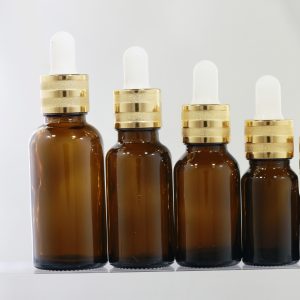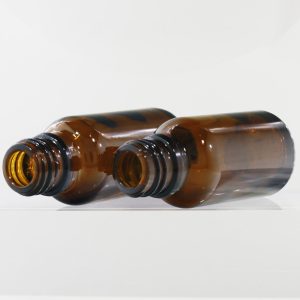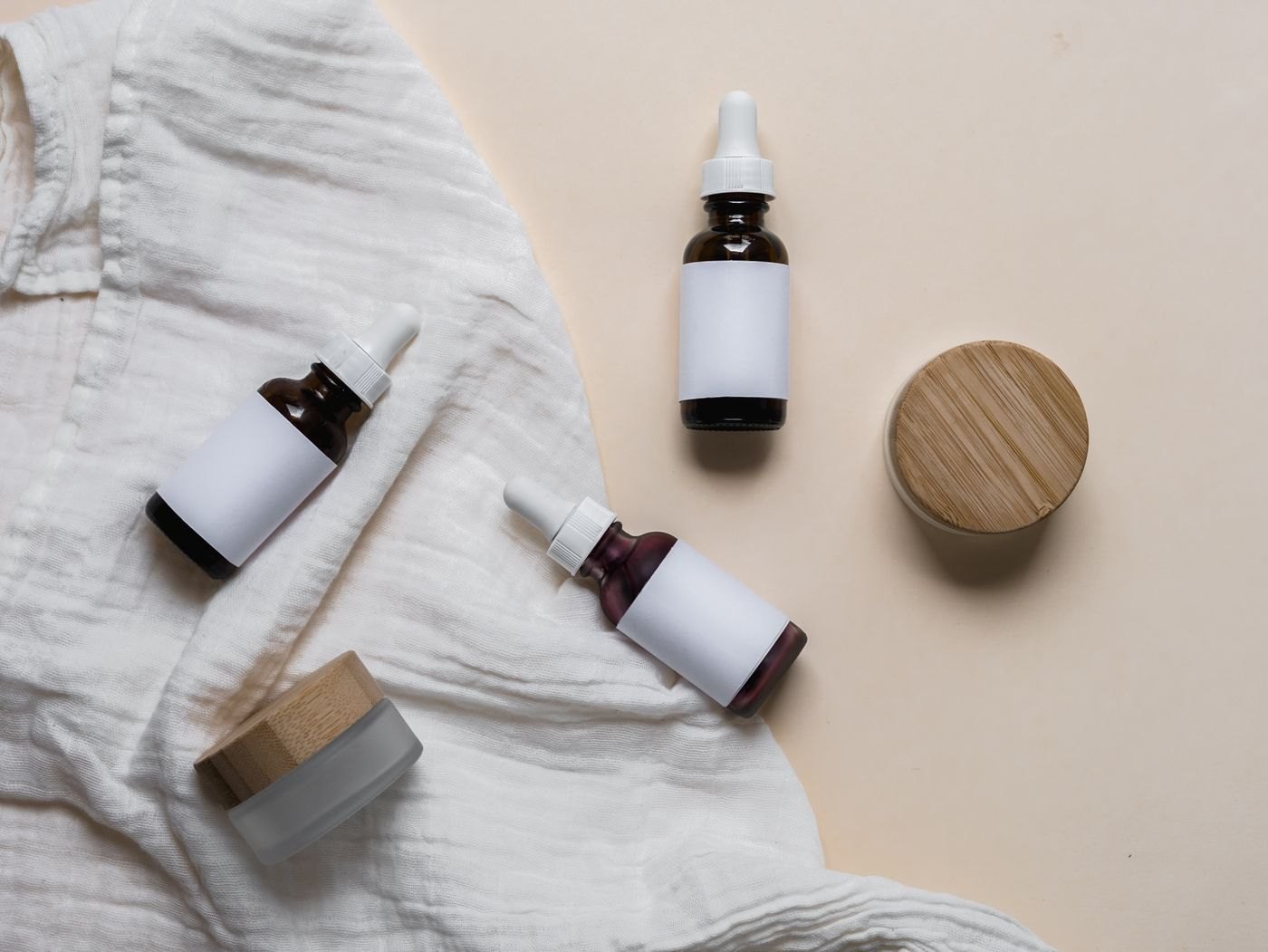
Two brands order the same 30 ml amber bottle from the same mould, fill it with the same kind of serum, and sell it at the same price. One of them gets letters from customers saying the bottle “only lasts two weeks.” The other gets letters saying the dropper “barely gives anything.” Neither brand has a formula problem. Both of them have a dispenser problem, and the numbers that would have caught it were available before the purchase order was signed.
The dispenser is the only part of the pack the customer touches every day. It sets the dose, the dose sets how long the product lasts, and how long it lasts sets whether the price feels fair. It also decides whether your serum survives twelve months on a bathroom shelf without turning the wrong colour, because the pump body and the gasket sit in contact with your concentrate far longer than the glass does.
This guide is the working checklist we use when a brand sends us a formula and asks, “which closure should we take?” It covers what each dispenser is actually good for, the viscosity thresholds where the answer changes, the dip tube measurement that quietly ruins fills, and the compatibility traps that only appear after the goods have shipped.
1. Four dispensers, four different jobs
The four families below cover almost every cosmetic glass project. They are not interchangeable, and the differences are not cosmetic either — each one moves a different volume per stroke and tolerates a different range of products.
| Dispenser | Typical products | Output per actuation | Product viscosity | Typical neck |
|---|---|---|---|---|
| Glass pipette dropper | Serums, facial oils, essence, hair oil | 0.04–0.05 ml per drop (18–22 drops/ml) | Water-thin to light oil, under 200 cP | 18-415, 18-410, 20-400 |
| Lotion pump | Lotion, milk, cleansing oil, serum gel | 0.5 / 0.8 / 1.0 ml per stroke | 800–15,000 cP | 20-410, 24-410, 28-410 |
| Mist sprayer | Setting spray, toner mist, body mist, perfume | 0.08–0.15 ml per actuation | Below 30 cP, alcohol or water based | 15 mm crimp, 18-415, 20-410 |
| Jar and screw cap | Cream, butter, balm, mask, scrub | No dose — spatula or finger | Above 20,000 cP, or any solid | 38-400, 48-400, 53-400, 70-400 |
Notice that the neck finish is not decoration — it is the interface that decides which dispensers are even possible. An 18-415 bottle can take a dropper or a small sprayer; it cannot take a 24 mm lotion pump without an adapter, and an adapter changes the height, the silhouette and the leak risk. Our guide to neck finishes covers the thread and bead dimensions if you need to match a closure you already buy.
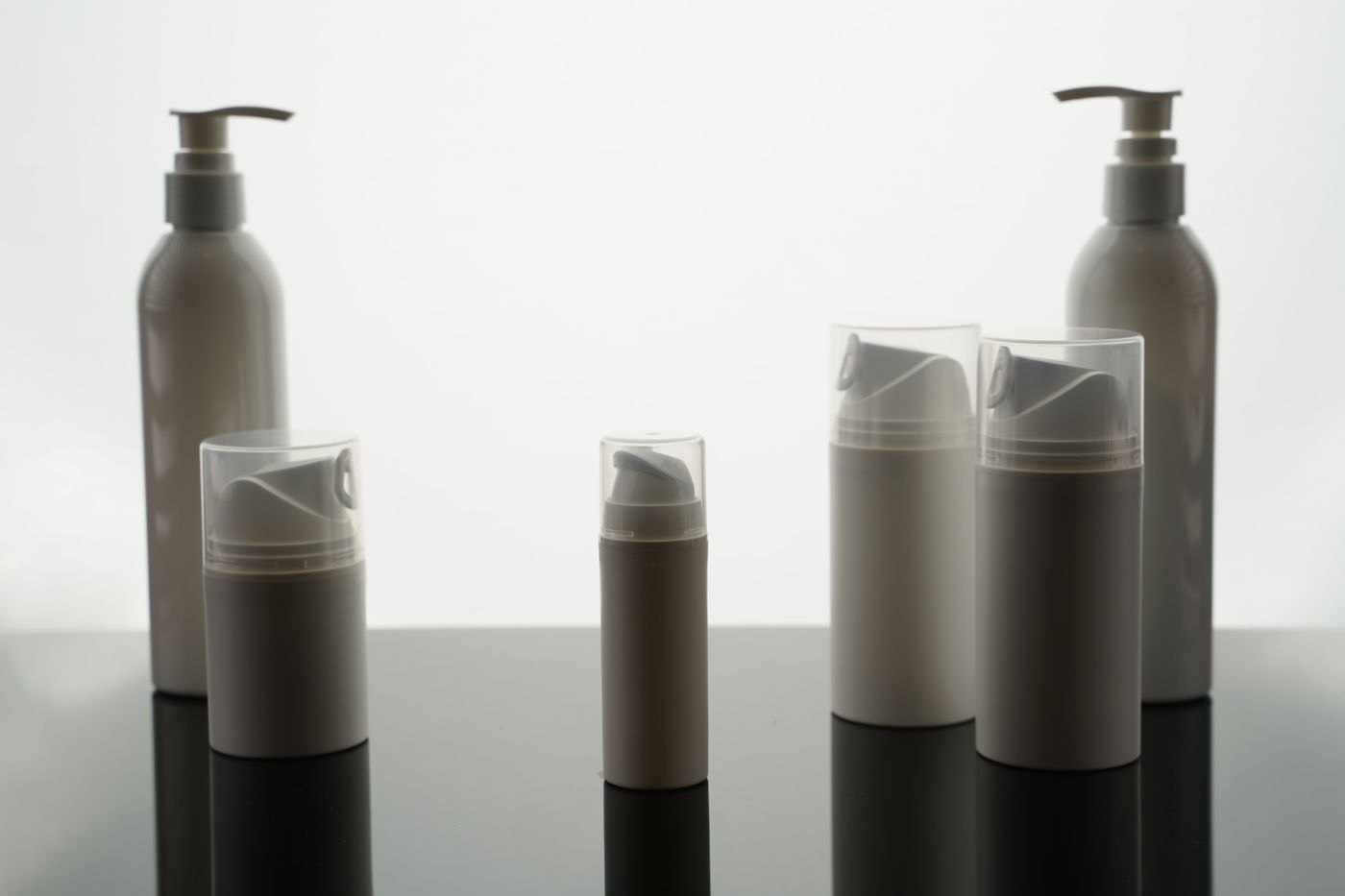
2. Start with viscosity, not with the packaging catalogue
Every dispenser failure we get called about starts the same way: someone chose the closure from a photo, then discovered the product will not move through it. Viscosity is the first number to check, and it has to be measured at the temperature the customer will use the product, not at the temperature it was mixed.
A gel that reads 6,000 cP at 25 °C can read 14,000 cP in a cold bathroom in January. A lotion pump that delivered 0.8 ml in the lab can deliver 0.55 ml in that same bathroom, and the brand discovers it through reviews rather than through a bench test. Ask your lab for the viscosity at 20 °C and at 5 °C before the dispenser is fixed.
| Measured viscosity (cP at 20 °C) | What works | What fails, and how it shows up |
|---|---|---|
| Under 30 | Mist sprayer, dropper | A lotion pump on this product leaks past the piston and drips at the actuator |
| 30–200 | Dropper, small sprayer | A sprayer gives a jet instead of a mist, because the liquid never breaks up at the nozzle |
| 800–4,000 | 0.5–0.8 ml lotion pump | A dropper cannot fill; the pipette draws a partial column and the dose becomes unpredictable |
| 4,000–15,000 | 1.0 ml pump with a wider dip tube | A standard 0.5 ml pump cavitates, delivering air with the product and stuttering |
| Above 20,000 | Jar with screw cap | Any pump will either stall or suck the dip tube off the housing |
Shear-thinning formulas are the exception worth testing twice. A cream that thins under pressure can pass through a pump in the lab and then fail in the customer’s hand, because the pump shears the product differently each time. When the formula is thixotropic, run the test with a filled, aged bottle and count the strokes until the output drops — that number is your real dose.
3. Dose per stroke is the number that decides your label claim
Brands usually calculate “how long it lasts” from the fill volume alone. That is the wrong arithmetic. The customer experiences the product as strokes and drops, so the honest calculation starts from output per actuation and works backwards.
| Pack | Output | Realistic daily use | Days of use from 30 ml |
|---|---|---|---|
| 18-415 dropper, 0.05 ml/drop | 0.20 ml (4 drops) | 4 drops, twice daily | About 37 days |
| Lotion pump, 0.5 ml | 0.50 ml (1 stroke) | 2 strokes, twice daily | About 30 days |
| Lotion pump, 0.8 ml | 0.80 ml (1 stroke) | 1 stroke, twice daily | About 18 days |
| Mist sprayer, 0.10 ml | 0.10 ml (1 actuation) | 4 actuations, twice daily | About 37 days |
The 0.5 ml and 0.8 ml pumps sit on the same bottle and the same shelf, and one lasts 40 percent longer than the other. Nothing on the front label has to change, but the review section will notice. If your product page says “lasts about a month,” a 0.8 ml pump on a 30 ml fill makes that claim false after eighteen days.
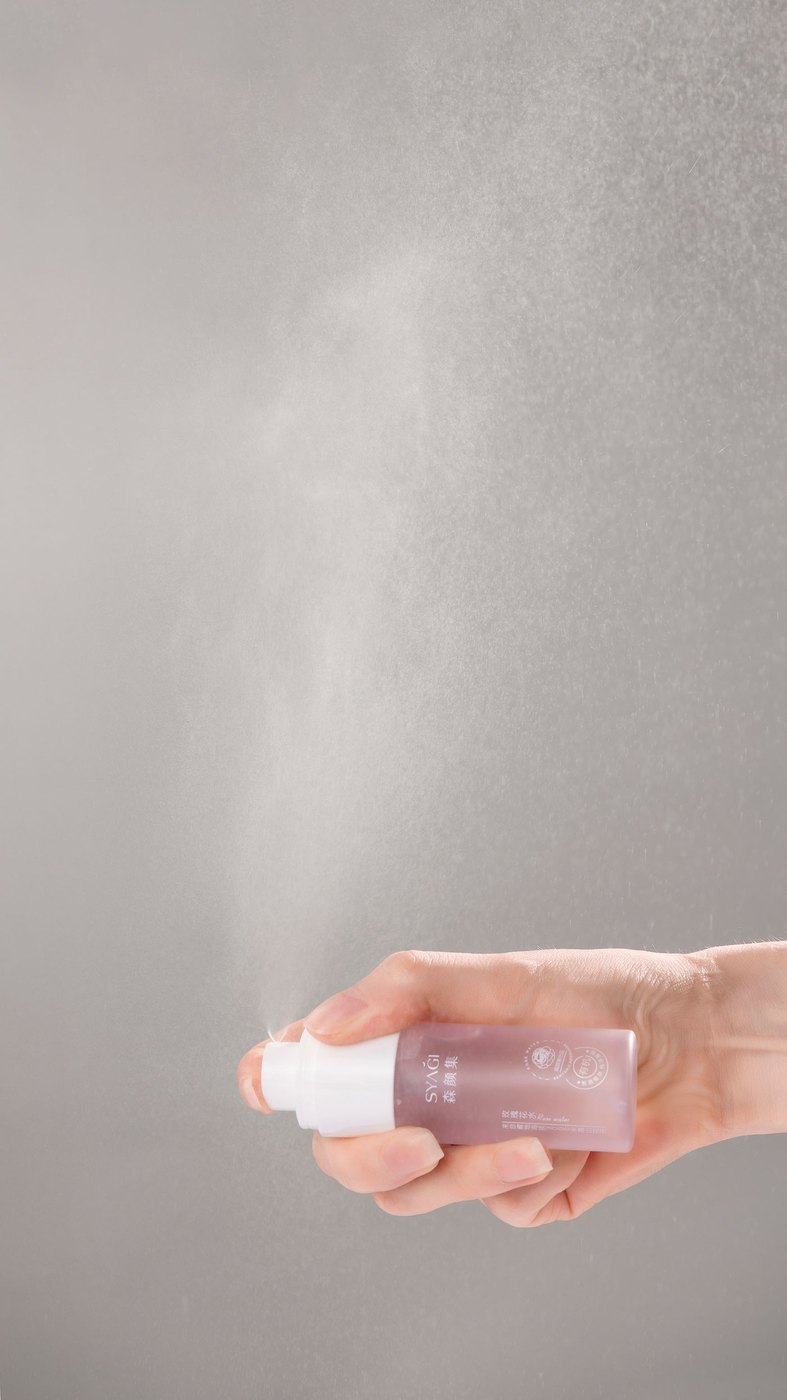
Sprays deserve their own note. The same sprayer delivers different volumes depending on how hard the customer presses and how far the bottle is held from the face. For mist products, quote the output at a defined actuation force — we test at 20 N — and state the tolerance, usually plus or minus 15 percent, or you will never settle a complaint about “the bottle empties too fast.”
4. Dip tube length: the measurement that ruins more fills than viscosity
The dip tube is the cheapest part in the pack and the one we see specified wrong most often. Too long and it bends against the base, starving the pump on the last third of the bottle. Too short and the pump starts drawing air while there is still 6 ml of product left, which the customer reads as “the bottle lied.”
Measure the inside height of the bottle, from the base to the sealing surface of the neck — not the outside height, and not the height to the top of the thread. Then subtract three allowances:
| Allowance | Typical value | Why it is there |
|---|---|---|
| Housing insertion depth | 6–10 mm | The pump collar sits inside the neck; the tube starts below that |
| Collar engagement | 3–5 mm | Thread depth plus gasket compression when the closure is torqued |
| Bottom clearance | 2–4 mm | Keeps the tube off the base so it cannot seal itself shut |
Worked example: a 30 ml bottle with an inside height of 92 mm, a neck depth of 8 mm, a collar engagement of 4 mm and 3 mm of clearance needs a tube of about 77 mm. Stock tubes come in 2 mm steps, so you specify 76 mm and accept ±1.5 mm. If the bottle is 92 mm outside and 86 mm inside, the same calculation gives 71 mm — and ordering the 76 mm tube because the drawing said “92” is exactly how a brand ends up with 5,000 sets that cannot empty a bottle.
5. Material compatibility: where fragrance oils and acids actually attack
Glass is inert, which is why it is the right container for reactive formulas. The dispenser is not inert: it contains polypropylene, polyethylene, thermoplastic elastomers, silicone, and in most pumps a metal spring. That is four or five materials in contact with your concentrate for a year.
| Formula type | Main risk | Acceptable | Avoid |
|---|---|---|---|
| Fragrance or essential oil concentrate | Gasket swell, actuator softening, loss of terpenes into plastic | PP body, glass or PP-lined collar, FKM gasket | Silicone and EPDM gaskets, PETG bodies |
| AHA or BHA, pH below 4 | Metal spring corrosion, discolouration at the nozzle | 316 stainless spring, plastic-spring pump | 304 springs, aluminium collars |
| 20 percent or more alcohol | Stress cracking, hazing, brittle actuator | PP, glass pipette, HDPE | PETG, acrylic actuators, SAN |
| Vitamin C, low pH, water based | Oxidation, metal ion catalysis, browning | Glass, PP, airless pump | Any metal in contact, dropper bulbs that pump air in |
| Retinol in oil | Light and oxygen, not plastic attack | Amber glass, airless, dropper with tight bulb fit | Clear glass with a loose cap, wide-mouth pumps |
The practical version: if you are selling a fragrance-heavy oil in glass, specify the gasket material in writing. Most stock droppers ship with silicone or EPDM because those are cheap and fine for water-based serums. They are the wrong choice for a 100 percent oil, and the failure takes three to six months to appear — long after the containers have been paid for.
6. Neck finish and closure are one purchase, not two
Buying glass from one supplier and closures from a second is normal, and it is also where leaks come from. The thread, the bead, the sealing land and the gasket all have to agree, and “18 mm” alone does not describe any of them.
| Finish | Common closure | Torque target | Watch for |
|---|---|---|---|
| 18-415 | Dropper, small mist sprayer | 0.5–0.9 N·m | Bulb pushed too deep; pipette touches base |
| 18-410 | Dropper, screw cap | 0.5–0.9 N·m | Mixing 410 and 415 caps; they look alike and both thread on |
| 20-410 | Small lotion pump | 0.9–1.4 N·m | Thin bead deforms under over-torque and leaks at the shoulder |
| 24-410 | Standard lotion pump, 0.8–1.0 ml | 1.0–1.6 N·m | Collar height mismatch: actuator sits proud or drags on the neck |
Specify torque as a range with a measurement method, not as “hand tight.” We test at 1.0 N·m for 18 mm droppers and 1.2 N·m for 24 mm pumps, hold for two seconds, then run the leak test. If the closure is over-torqued, the gasket deforms permanently and the unit will leak later even though it passed at the filling line.
7. Cost, MOQ and lead time: what really changes when you switch
Switching dispensers is rarely a packaging-only decision. It moves the fill line setting, the carton height, the shipping volume, and often the MOQ, because closures are bought in sets with the bottle.
| Dispenser | Relative closure cost | Typical set MOQ | Added lead time |
|---|---|---|---|
| Dropper (18-415) | 1.0 (baseline) | 5,000 | None, usually in stock |
| Lotion pump 0.5 ml | 1.5–1.9 | 5,000 | 3–7 days |
| Lotion pump 0.8–1.0 ml | 1.8–2.4 | 5,000–10,000 | 7–12 days |
| Mist sprayer | 1.6–2.2 | 5,000 | 7–10 days |
| Jar cap | 0.8–1.3 | 5,000 | None |
The cost gap looks small per unit and is not small per order. On 10,000 sets, moving from a 0.5 ml to a 1.0 ml pump can add a five-figure number in renminbi before freight — and the same change removes 40 percent of the product’s usable life. Decide the dose first, then let the closure cost follow. If volumes are still small, our MOQ guide explains how to split a first order across two finishes without paying for two full minimums.
8. Incoming QC: six checks worth putting in the purchase order
Most dispenser complaints are not manufacturing defects; they are specification gaps. These six checks, written into the PO with limits, close the gaps that matter:
- Output per stroke. Ten strokes on a filled bottle, weighed, averaged; tolerance ±10 percent of the declared volume.
- Actuation force. 12–28 N for lotion pumps, 20–40 N for mist sprayers, measured at the actuator centre.
- Leak test. −40 kPa vacuum for 30 seconds on a filled, torqued unit; no continuous bubble stream.
- Dip tube length. Measured against the drawing, ±1.5 mm, with the bend angle checked on 30 pieces per lot.
- Closure torque. Tested on the production line hourly; record the value, not just “pass.”
- Spray pattern and mist quality. Visual check at 20 N from 150 mm onto paper; no jet, no large droplets, no dry centre.
All six can be run with a balance, a vacuum gauge, a torque meter and a sheet of paper. None of them needs a laboratory, and all of them cost less than one recall.
9. The short version
If you are choosing right now, run these five lines in order and the answer usually falls out:
- Viscosity at 20 °C: under 30 cP → sprayer or dropper; 800–15,000 cP → pump; above 20,000 cP → jar.
- Dose the customer expects: drops mean a dropper; a single press means a pump; a mist means a sprayer.
- Neck finish on the bottle: pick the dispenser that fits the finish you already own, or change both together.
- Inside height: tube = inside height − insertion depth − engagement − 2–4 mm clearance.
- Chemistry: oils and low-pH acids need gasket and spring specified in writing, not assumed.
We stock droppers, lotion pumps, mist sprayers and jar caps matched to the glass we sell, so the finish, the tube length and the gasket are checked against the same drawing. If you send us the formula viscosity, the fill volume and the neck finish, we will tell you which dispenser survives the first twelve months — and which one will bring the complaints.
Photography in this article is licensed stock photography from Pexels, used to illustrate dispenser types. Product dimensions quoted are typical ranges for cosmetic glass packaging; confirm the exact values on your approved drawing.
Further reading: Neck finish guide · Bottle decoration and format guide.